







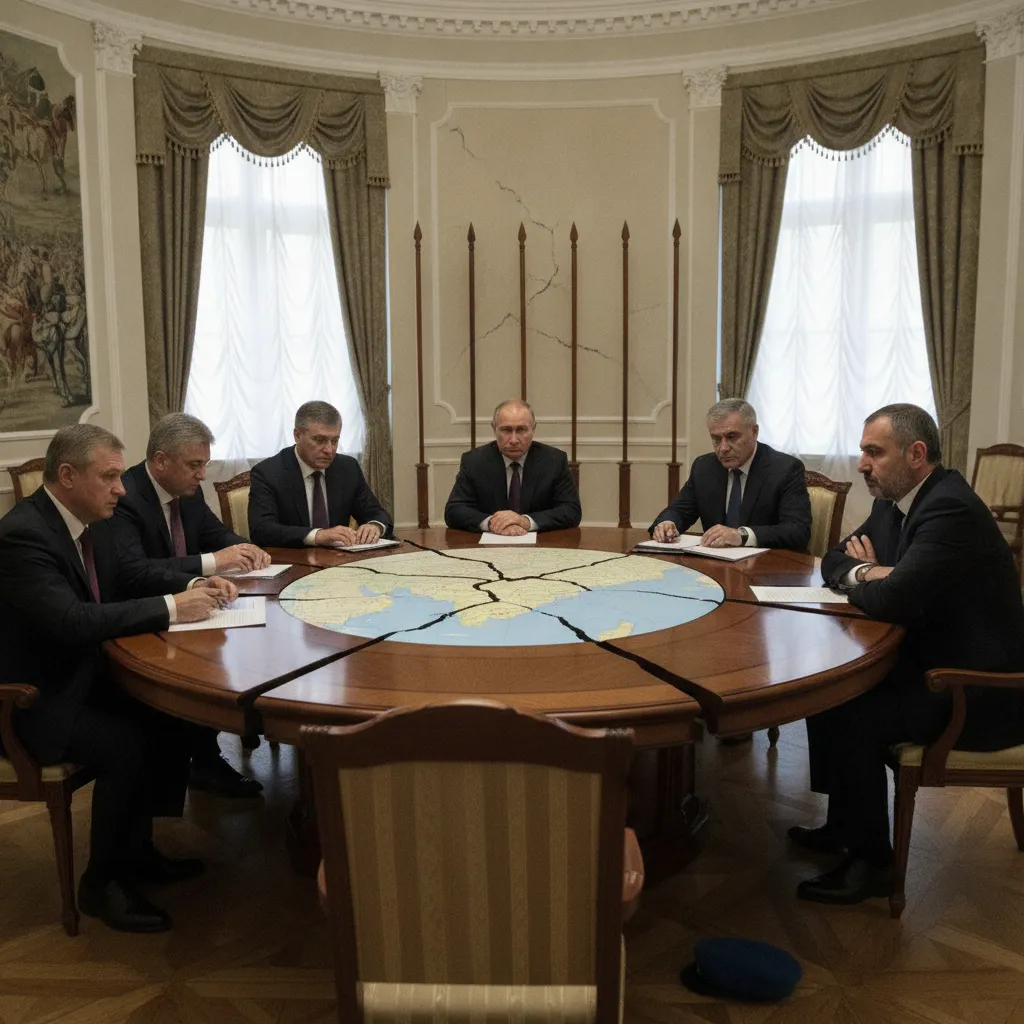

Vladimir Putin enters this week’s Collective Security Council meeting facing a stark reminder that Russia’s influence over its former satellites is slipping. The atmosphere is expected to be particularly strained regarding Armenia, a nation that has essentially frozen its participation in the Russia-led military bloc. For years, Yerevan viewed the organization as its primary shield against aggression, but that trust evaporated when the alliance failed to intervene during Armenia’s devastating conflict with Azerbaijan. Now, Prime Minister Nikol Pashinyan has openly stated that Armenia’s interest in the group has simply run its course.
This diplomatic rift highlights a broader pattern of disillusionment across the post-Soviet space. While some member states remain quiet out of economic necessity or fear of provoking the Kremlin, others are quietly diversifying their loyalties. Many now view Russia’s military prestige as a fading myth, eroded by the grueling stalemate in Ukraine and the perceived obsolescence of Russian hardware. This perception has pushed countries like Kazakhstan and Kyrgyzstan toward new security arrangements, including burgeoning ties with Turkey through the Organization of Turkic States.
The geopolitical calculus has shifted because Moscow appears too distracted and drained by its invasion of Ukraine to enforce discipline among its neighbors. With Western sanctions biting into the economy and resources diverted to the front lines, Putin lacks the leverage needed to punish disloyalty or compel renewed commitment. Even traditional partners are playing a double game, maintaining ceremonial nods to Moscow while welcoming high-ranking American and European diplomats behind closed doors.
As Armenia looks toward potential European Union membership and Central Asian powers forge independent regional bonds, the upcoming summit serves as less of a strategic planning session and more of a test of endurance. The Kremlin may still hold formal authority over these nations on paper, but on the ground, the glue that once bound these republics to Moscow is rapidly dissolving into a collection of opportunistic partnerships and hard-won independence.