








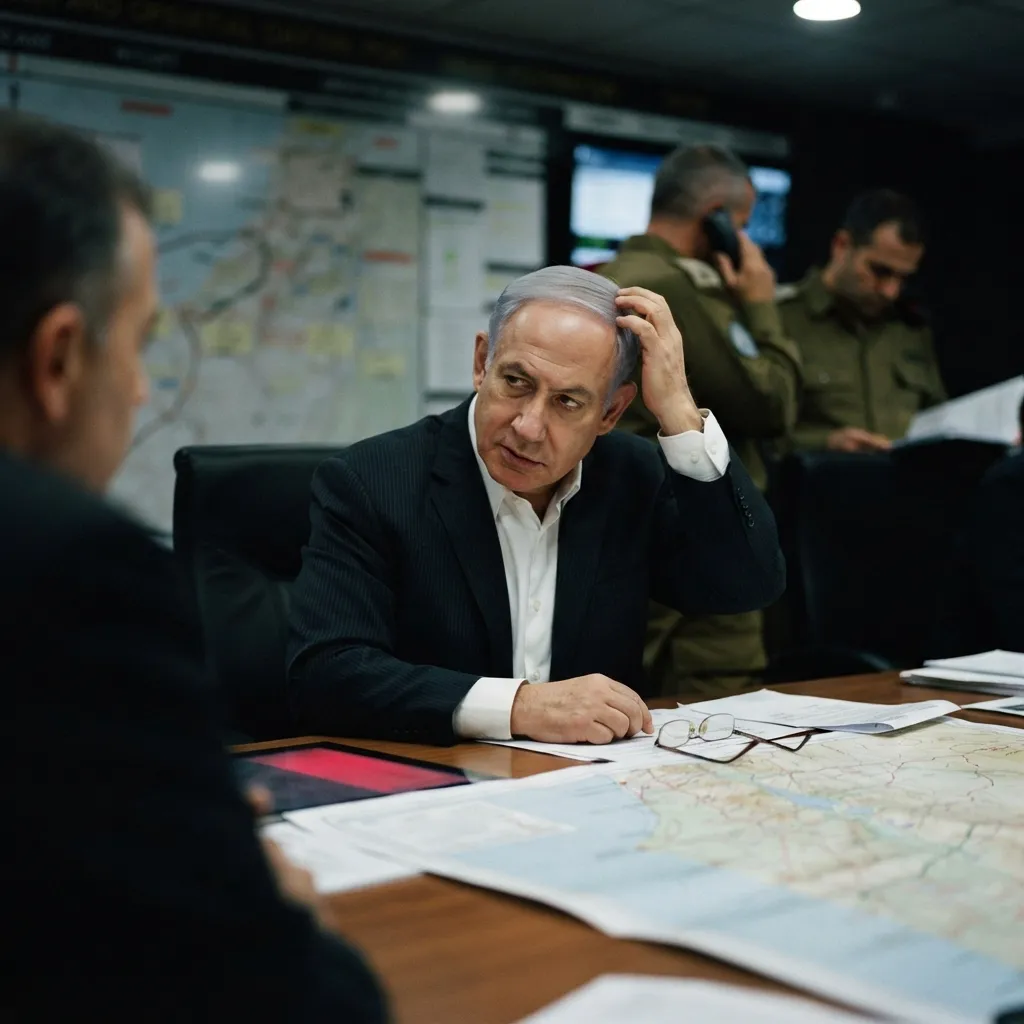

Benjamin Netanyahu appears to be navigating a narrowing path toward political oblivion, and his latest strategy involves leaning heavily into the long standing dread surrounding Iran. As his right wing coalition loses its grip on power following a period marked by intense regional conflict and domestic instability, there are mounting signs that the prime minister is attempting to engineer a fresh crisis. Reports indicate that Netanyahu has pushed for renewed military strikes against Tehran, allegedly contacting Donald Trump frequently and clashing with his own military leadership, who warn that such actions could ignite a catastrophic wider war.
Critics and opposition leaders view these maneuvers as a transparent effort to stall the formation of a new government under Gadi Eisenkot. By manufacturing a security emergency, Netanyahu hopes to force the creation of a national unity government that would keep him in office or simply run down the clock until another election can be held. Political analysts suggest that this is essentially a fight for survival, given the various criminal cases hanging over him and his dwindling support among the general public. In this light, a controlled escalation with Iran becomes less about national security and more about personal preservation.
However, the true potency of this gamble lies in what scholars call Iranophobia. Despite knowing that a conflict might be artificially induced for political gain, much of the Israeli public remains primed for war due to decades of warnings about Iranian nuclear ambitions. Professor Haggai Ram notes a paradox where even those who recognize Netanyahu’s cynicism might feel compelled to rally behind him once missiles begin to fly. For many, especially within the military establishment, confronting Iran is viewed as an inevitable destiny rather than a choice, making it an incredibly effective tool for someone looking to maintain control during a political transition.
This climate of permanent expectation creates a dangerous loophole for any leader facing collapse. While psychologists argue whether international allies like the United States would actually permit such destabilization, the internal logic suggests that chaos serves Netanyahu better than peace. Between the threat of prison and the prospect of political irrelevance, the prime minister seems willing to risk regional volatility if it means transforming widespread fear into a lifeline for his own career.