



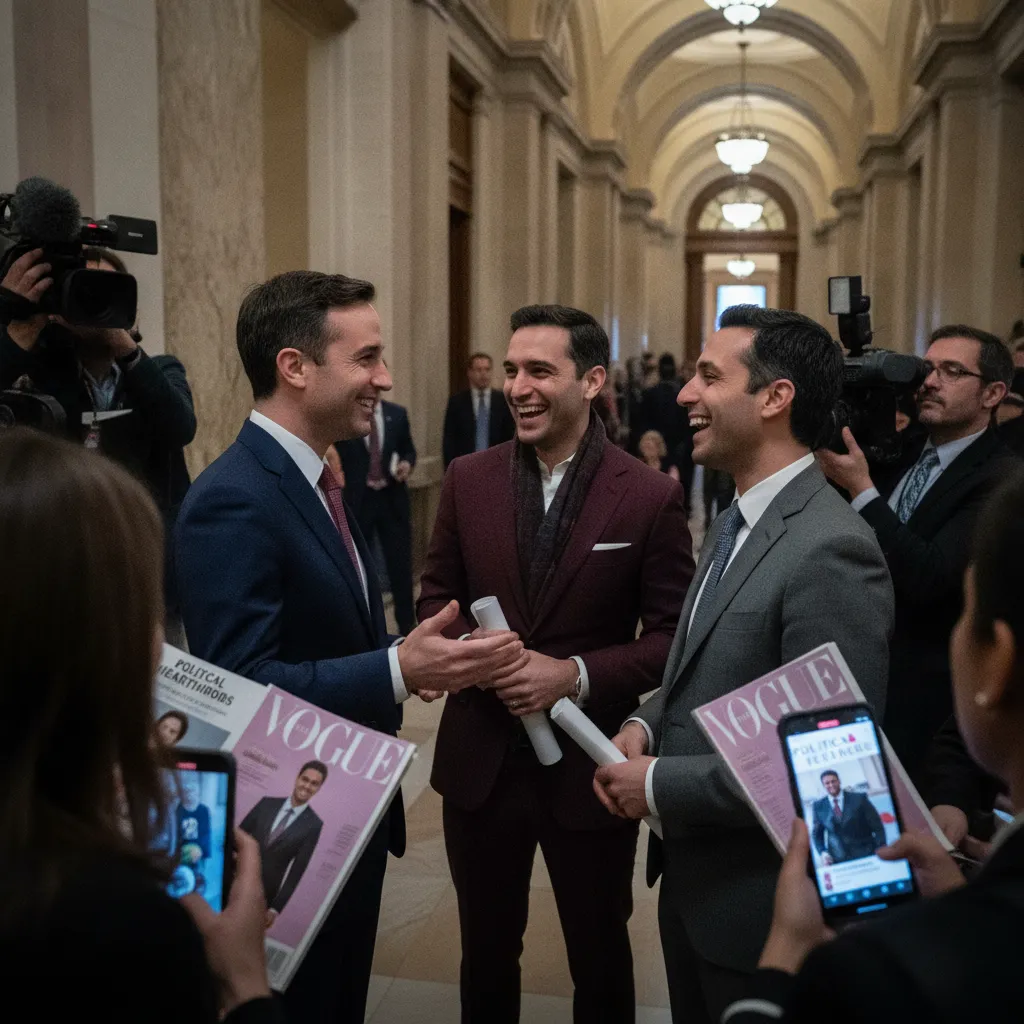

The intersection of governance and glamour has sparked a heated debate following a recent Vogue piece that suggests we have entered a golden age of attractive male politicians. By highlighting figures like Pete Buttigieg, Jon Ossoff, and Zohran Mamdani, the fashion magazine shifted its lens away from policy platforms and toward the physical appeal of Democratic lawmakers, treating the halls of power more like a runway than a legislative chamber.
This focus on aesthetics did not go unnoticed by critics across the aisle. On Fox News, host Laura Ingraham and guest Jimmy Failla took aim at the publication, mocking the idea that a politician’s looks should be treated as a noteworthy credential. Their segment questioned whether modern journalism had devolved into mere celebrity worship, suggesting that prioritizing beauty over bravery or belief is a sign of declining standards in political reporting.
Ingraham drew parallels between this current trend and previous media fascination with Barack Obama’s physique during his rise to prominence, arguing that there is a recurring pattern of superficiality in how certain leaders are framed. To her and Failla, the obsession with hot guy politicians isn’t just trivial; it represents a broader shift where image becomes an asset used to distract from actual governing records.
As social media continues to blend politics with influencer culture, the tension between substance and style remains high. While some argue that charisma and appearance can make leadership more accessible or appealing to younger voters, detractors insist that focusing on jawlines rather than legislation undermines the seriousness of democratic institutions. For now, it seems the battle for public attention is being fought as much through skincare and tailoring as it is through town halls and white papers.