








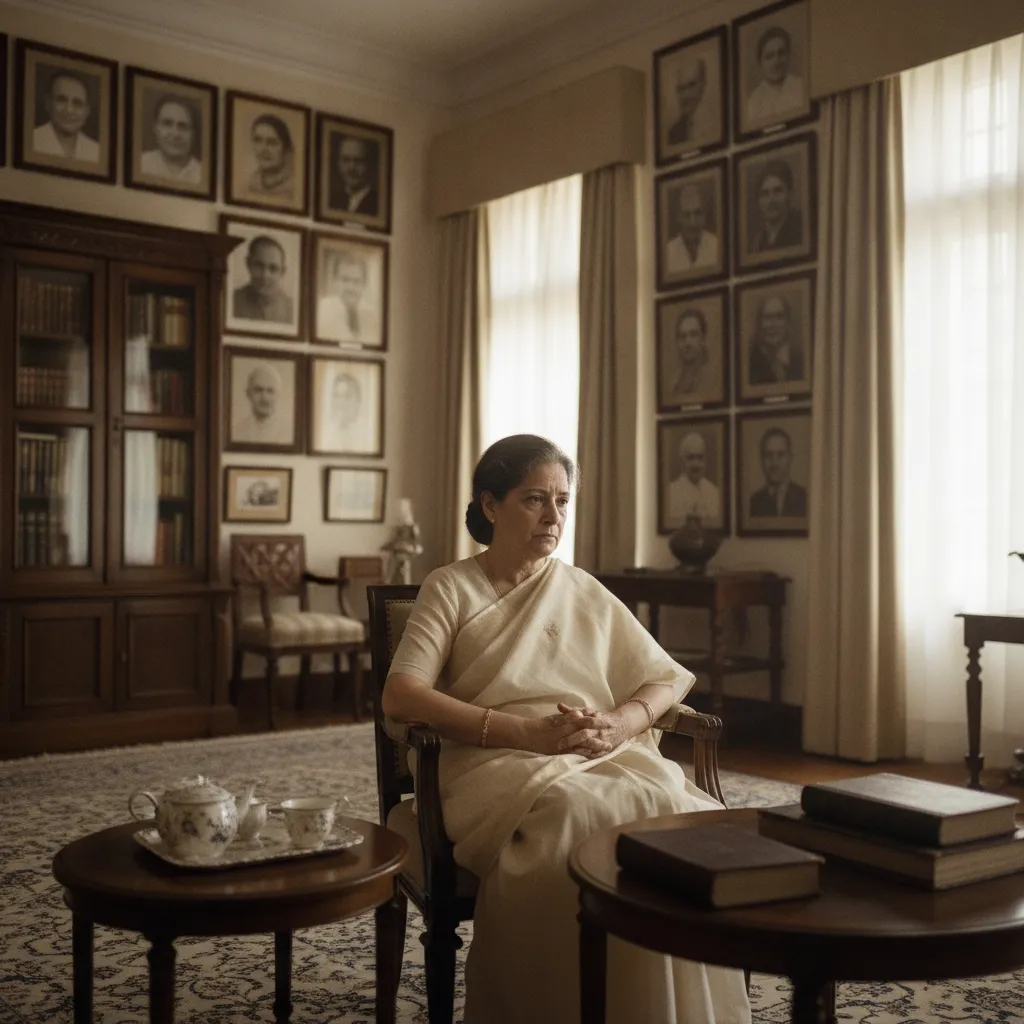

Sitting in her sprawling Delhi bungalow, surrounded by the portraits of the men and women who shaped modern India, Sonia Gandhi describes her life as unremarkable. It is a modest claim for a woman whose journey began in a working class Italian town and led her to the absolute center of Indian political power. From holding the bloodied body of her mother in law, Indira Gandhi, to leading the Congress party through decades of turmoil, she has navigated a trajectory defined by sudden transitions from private citizen to national figurehead.
Her entry into this world was born of romance rather than ambition. While studying in Cambridge during the 1960s, she fell for Rajiv Gandhi at a Greek restaurant, unaware that he was the heir to India’s most potent political lineage. She remembers it as a lightning bolt moment, drawn to his kindness and warmth long before she understood the weight of his surname. However, that innocence vanished as she was transplanted into a foreign culture and witnessed the brutal reality of political violence. After Indira’s death, she saw Rajiv ascend to the premiership, but she lived with a haunting premonition that he would eventually be targeted too.
That fear became reality in 1991 when Rajiv was assassinated by separatists. Despite an inherent distaste for politics, Sonia stepped out of the shadows to prevent her husband’s party from fracturing. She eventually led them to victory in 2004 but made the historic decision to decline the prime ministership herself. Though soon viewed by critics as cold or aloof, those meeting her now find a woman who is warm yet anxious about how history will judge her and her family.
Now reflecting on her legacy ahead of a personal memoir, Gandhi expresses deep pain over the current state of Indian democracy. She views Prime Minister Narendra Modi as an authoritarian force who has systematically dismantled democratic institutions and replaced pluralism with hardline nationalism. For someone who rememberes an era of parliamentary cordiality and consultation, she finds today’s polarized atmosphere heartbreaking, noting that the opposition is now treated as though it counts for nothing in its own country.