






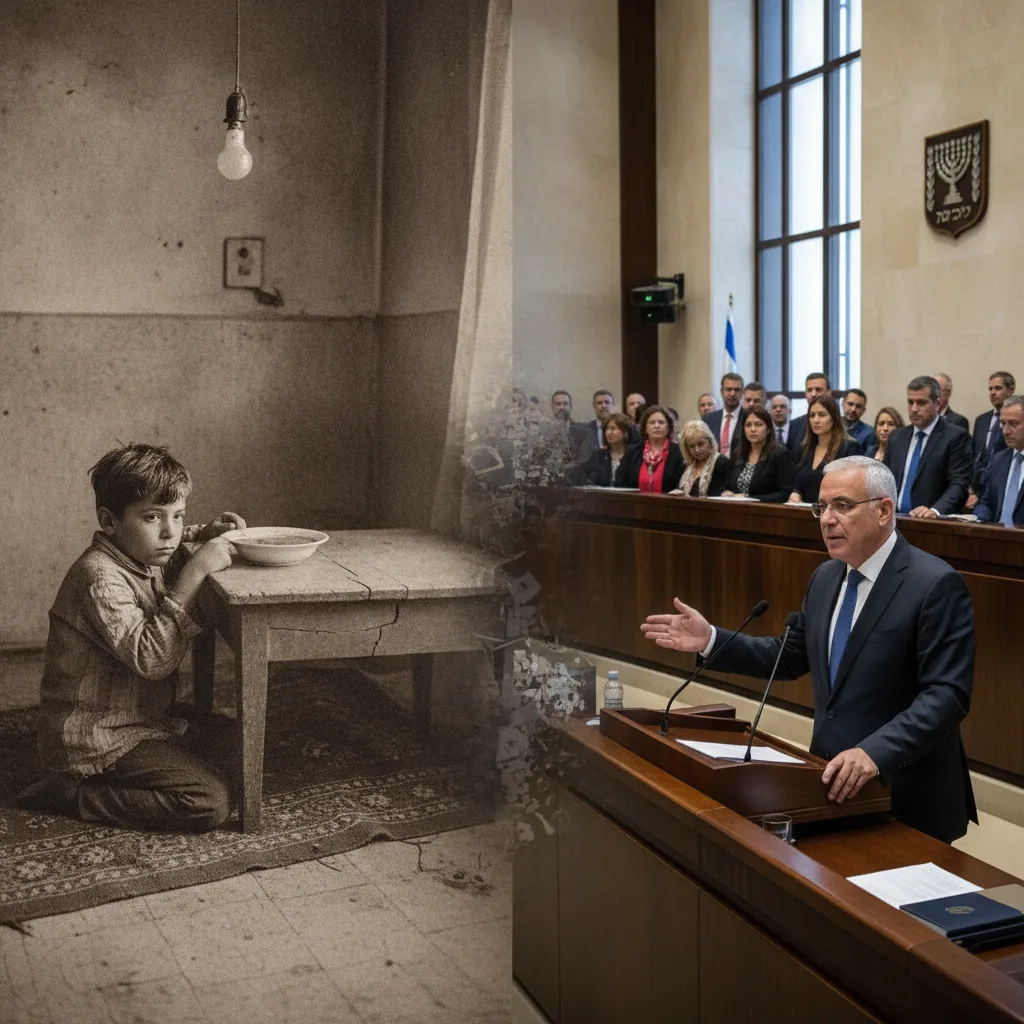

Public trust in Israeli politicians has long been fragile, with many citizens viewing members of the Knesset as figures driven more by prestige and power than by a genuine desire to help the average person. This perception persists even when lawmakers come from humble beginnings. While one might assume that growing up in a needy household would naturally lead a politician to champion policies against inequality, a recent study from the Hebrew University of Jerusalem suggests that personal history doesn’t always dictate political action.
Dr. Shiran Tayeb Elmakias led the research, which explored how former legislators connected their early memories of deprivation to their views on social responsibility. By interviewing fifteen former MKs who served during the 1990s, Tayeb Elmakias discovered a striking disconnect. Many lawmakers could describe the hardships of their youth in vivid detail, recalling overcrowded transit camps and families struggling to afford food, yet these same individuals often pivoted toward an ideology of self reliance once they reached positions of authority. Instead of advocating for systemic changes to dismantle structural barriers, they frequently framed their own ascent as proof that anyone could succeed through sheer willpower and hard work.
For Tayeb Elmakias, whose own roots trace back to Tunisia and Morocco, the findings were both surprising and disappointing. She noted that while there was a general commitment to helping those in need, the narrative shifted away from collective ethnic or class struggle toward individual achievement. In her view, personal experience does not speak for itself; rather, it depends entirely on how a person interprets their journey. When hardship is seen merely as an obstacle to be overcome personally, it ceases to be viewed as a policy failure that requires government intervention.
The study also touched upon the complex intersection of ethnicity and identity in Israeli politics. Using examples such as former IDF chief Gadi Eisenkot, Tayeb Elmakias highlighted how leaders from marginalized backgrounds often distance themselves from those origins or fail to leverage them politically. Even as Mizrahi Israelis continue to advance into high ranking academic and political circles, the researchers found that rising above poverty does not automatically create a bridge of empathy or legislation for those still trapped by it. Ultimately, the research suggests that reaching the top can sometimes blind leaders to the very systems that made their climb so difficult in the first place.