








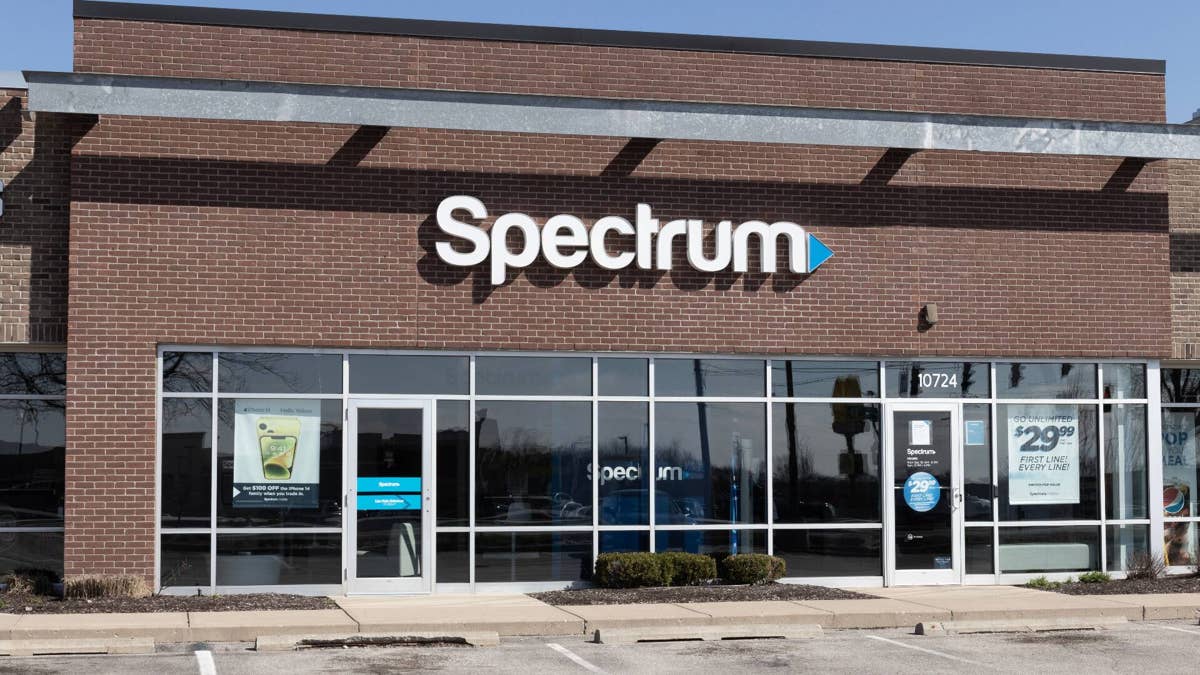

Spectrum, which is operated by Charter Communications, is undergoing a major operational shift as it continues to face customer retention challenges in two key areas of its business.
After acquiring Cox Communications for $34.5 billion in August, Charter revealed in its latest earnings report that it lost 233,000 internet customers (on a pro forma basis) during the third quarter of 2026. Specifically, legacy Spectrum lost 156,000 internet customers (higher than the 109,000 it lost in the same quarter in 2025) and legacy Cox lost 77,000.
Charter also lost 77,000 cable TV customers (on a pro forma basis) in the third quarter, with legacy Spectrum losing 38,000.
Charter’s customer losses also came alongside declines in its financial performance, with internet revenue falling 3.7% year over year during the quarter and cable TV revenue decreasing 9.8% year over year.
Charter plans to cut costs amid Spectrum customer losses
Amid these challenges, Charter has announced a new $2 billion cost-cutting plan to get its Spectrum business back on track.
On an earnings call on Nov. 6, Charter CEO Chris Winfrey said the company will embark on a “new path forward” to “address a more competitive and complex market.”
“We recognize that we’ve not generated the customer growth and performance we expect, and our customer satisfaction is not where it needs to be,” said Winfrey. “Returning Charter to growth requires more than incremental improvements to how we operate.”
He said that Charter will adopt a new operating model, transforming its ability to compete in the market with “greater urgency and sharper focus” as it navigates “growing customer expectations for service delivery, experience, and value.”
“Going forward, we’ll maintain a relentless focus on two clear priorities: doubling down on returning our company to growth, and secondly, transforming Charter into a simpler, more efficient organization,” he said.
Charter is “now targeting an incremental $2 billion in annualized run rate operating expense savings over the next 18 months.”
“Much of that will come from simply eliminating projects that don’t contribute to internet growth, and we’ll be also organizing our leadership and teams for maximum effectiveness, increasing spans of control, and reducing layers,” said Winfrey. “We will drive even more meaningful partnership from a more focused and a narrowed set of vendors, requiring better speed, quality, and pricing.”
He clarified that these cost cuts “are not targeted at frontline service and sales employees.” However, Charter will reduce hiring and will move Cox service calls from offshore to its 100% U.S. employee base without increasing headcount.
Spectrum plans major changes as internet competition grows
A significant part of Charter’s transformation will include a sharper focus on improving its Spectrum internet business.
Charter interim Chief Financial Officer Kevin Howard revealed on the earnings call that the company faced heightened competition from broadband rivals offering fixed wireless and fiber internet services in the third quarter, adding to the challenges facing its internet business.
“During the quarter, we continued to see expanded fixed wireless competition versus a year ago, including lower sales from lower-income consumers, ongoing mobile substitution, and fiber overlap at a rate similar to prior quarters, and with continued aggressive promotions by certain competitors,” said Howard.
Winfrey said that Spectrum also saw “very minimal impact” from satellite internet competitors that are expanding their footprint nationwide, such as SpaceX’s Starlink, particularly in rural areas.
Read more: Spectrum faces new customer problem after Cox acquisition
“The low-Earth-orbit satellite providers are well-capitalized, and they have really smart engineers,” said Winfrey. “We do not discount them whatsoever. We take them at their word of what they are looking to do.”
“(I) do think there is still capacity capabilities where our network, for the foreseeable future, is going to be faster on the upstream, downstream, has a lower latency, and is a much easier install and service proposition,” he continued. “But that does not mean that we discount them whatsoever.”
Winfrey emphasized that Spectrum is overall “not happy” with its internet business performance, and this transformation will make “winning more internet customers” a “top priority.”
He said this includes “adding more value” to Spectrum’s offerings “so that customers who are at a retail rate feel that they have got a fair and competitive price.” The company will make its internet options simpler, stronger, and more transparent overall, while leveraging opportunities to offer more bundled internet, mobile, and cable TV services.
“Too often, our most loyal long-term customers are at risk from aggressive price competition, and we also fully recognize the importance of internet ARPU (average revenue per user),” he said. “While our average ARPU is competitive, we’ll reconfigure our offers at promotion and retail by adding value into the relationship and earning ARPU.”
Additionally, Spectrum will double down on tackling customer pain points, which often drive customers to switch to competitors.
“We’ll also significantly enhance our service with an even more disciplined focus on what drives customer calls and dissatisfaction,” said Winfrey. “We’ll continue investment in AI technology to give our teams the tools to provide the best service and to reduce unnecessary service events.”
In a recent Reuters report, Paolo Pescatore, a telecom analyst and founder of PP Foresight, said that “Charter’s mounting broadband losses are alarming and underscore the scale of the challenge.”
He also said that Charter’s $2 billion cost-cutting plan is necessary, but “it cannot simply cut its way back to growth.”
Why Spectrum faces a tougher fight for internet customers
Charter’s new $2 billion cost-cutting plan and increased focus on improving its internet business come at a time when it has been facing criticism from customers on social media over its quiet increases in Spectrum internet prices.
This year, Americans have grown less tolerant of high internet service prices. According to a Reviews.org survey in March, 73% of Americans experienced an increase in their internet bills this year, compared with 43% in 2025.
Cost pressures have also prompted some consumers to change their service, with 30% reporting they canceled or downgraded their home internet this year to save money.
Unexpected fees have emerged as another source of dissatisfaction. The survey found that 67% have switched internet providers or considered doing so because of hidden or surprise charges, up from 56% the previous year.
More Telecom News:
- Spectrum faces new customer problem after Cox acquisition
- T-Mobile excludes 2 generous customer perks from new phone plans
- Comcast makes significant shift as customer losses mount
Growing dissatisfaction with rising internet costs and unexpected fees is creating an opportunity for broadband competitors, including wireless carriers offering fixed wireless and fiber internet services, to attract new customers.
For instance, in the third quarter of 2026, AT&T added 696,000 internet customers, according to its latest earnings report. Verizon also revealed in its most recent earnings release that it gained 314,000 new broadband customers.
While T-Mobile didn’t disclose its internet customer additions in its third-quarter 2026 earnings report, its CEO, Srini Gopalan, said on an earnings call in October that the carrier’s fiber business saw “year-over-year acceleration” in customer growth in the quarter.
He also said that T-Mobile is “really well ahead of pace” to its goal of hitting 15 million fixed wireless internet customers by 2030.
In addition to wireless carriers, Spectrum is also facing a growing challenge from SpaceX’s Starlink.
Starlink’s monthly internet plans currently cost between $55 and $130, and its customer base in the U.S. has expanded substantially.
According to a Telecom Gazette report, New Street Research estimates that Starlink now serves roughly 4 million U.S. broadband customers, up from an estimated 2.7 million in May.
Related: Spectrum hits a snag as it works to curb internet customer exodus